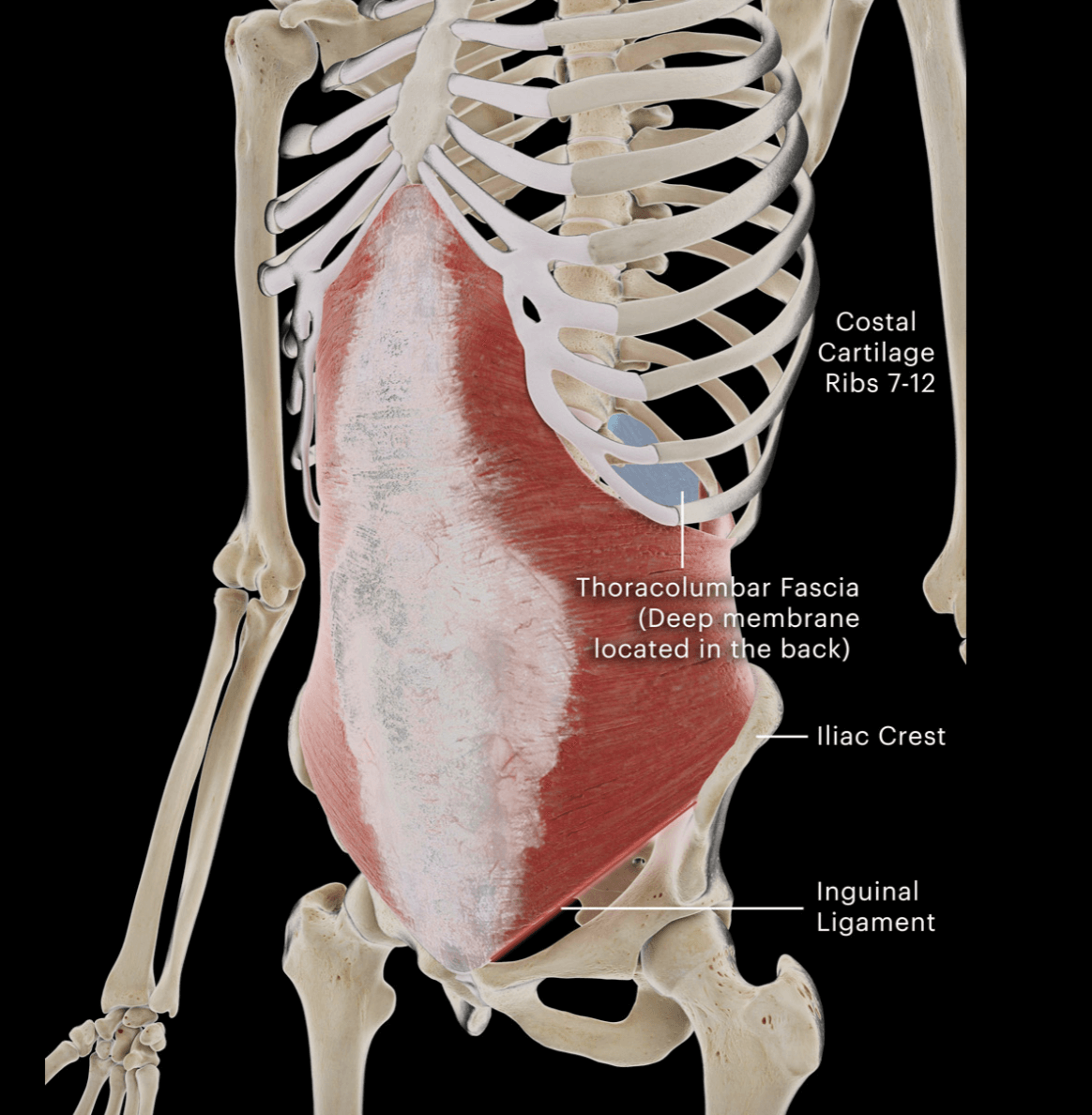
The Transversus abdominis muscle (TVA) lies on the lateral abdominal wall, deep into the internal and external abdominal oblique muscles. It forms the deepest layer of the abdominal wall. It runs horizontally across the abdominal area and literally forms a girdle or a ‘corset’, encasing internal organs and supporting the spine.
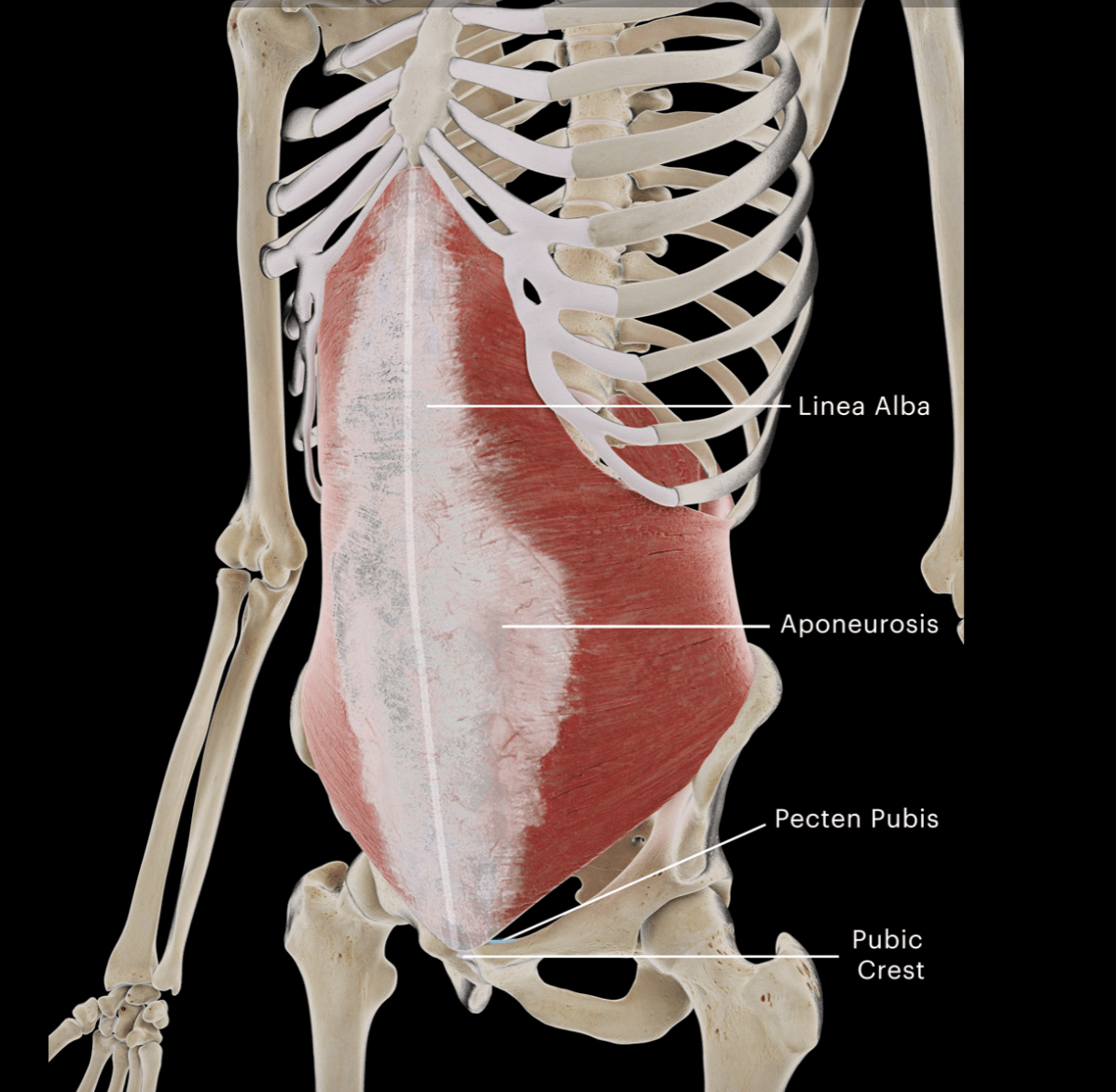
The anterior aponeuroses of the TVA fuse with the internal and external abdominal oblique muscles to form a single tendon (linea alba), forming a central sheath, in which the rectus abdominis muscle runs vertically.
A healthy TVA is a postural muscle that should contract whenever we move (e.g, lift our arms, walk, or turn our heads). When it contracts, it elongates the spine and assists in spinal flexion and rotation. It also assists with respiration and contracts when we laugh, sneeze, cough or forcefully exhale.
The TVA, with its horizontally directed fibers, is not capable of directly producing a spinal flexion. In fact its role, when its muscle fibers contract, is to pull the abdominal wall inward, allowing the body ‘to scoop’.
The TVA is critical to lower back health. As an intervertebral stabilizer, it decompresses the lumbar spine when it contracts and axially elongates. It protects the lower back and the intervertebral disks by reinforcing the spine and allowing it to sustain loading.
When the TVA is working properly, it will contract before the extremities move. If this does not occur, the spine will become unstable and the nervous system will not be able to efficiently recruit the muscles of the extremity and correctly perform the desired movement patterns.
- A weakness of transversus abdominis or other abdominal muscles increases the risk for abdominal hernias.
- As its name suggests, the fibers of transversus abdominis are oriented transversely, perpendicular to the linea alba.
- It is an important regulator when it comes to maintain normal abdominal tension and increasing intra-abdominal pressure.